Does the thought of taking your child to the dentist fill you with dread? You’re not alone. Many parents in Kalispell worry about their child’s dental anxiety—or their own. The good news is that sedation dentistry has transformed how families experience dental care, turning what once felt like an ordeal into a calm, comfortable visit.
If you’ve ever held a crying child in the dental chair or felt your own heart race at the sound of the drill, understanding your sedation options can change everything. Let’s explore how sedation dentistry works and which option might be right for your family.
What Is Sedation Dentistry and Who Needs It?
Sedation dentistry uses medication to help patients relax during dental procedures. It’s not just about pain management—it’s about creating an emotional environment where dental work becomes possible for people who might otherwise avoid it entirely.
Parents often ask whether sedation is “really necessary.” Consider these situations where sedation makes dental care safer and more effective:
- Young children who can’t sit still for extended procedures
- Patients with special needs who find dental environments overwhelming
- Anyone with a strong gag reflex that interferes with treatment
- Patients requiring extensive dental work who want to complete it in fewer visits
- Adults or children with previous traumatic dental experiences
Just as you might address 8 Bad Habits That Harm Your Oral Health (And How to Break Them) to prevent dental problems, choosing the right sedation approach helps you actually get the dental care you need rather than postponing it indefinitely.
Nitrous Oxide: The Gentle Introduction to Sedation
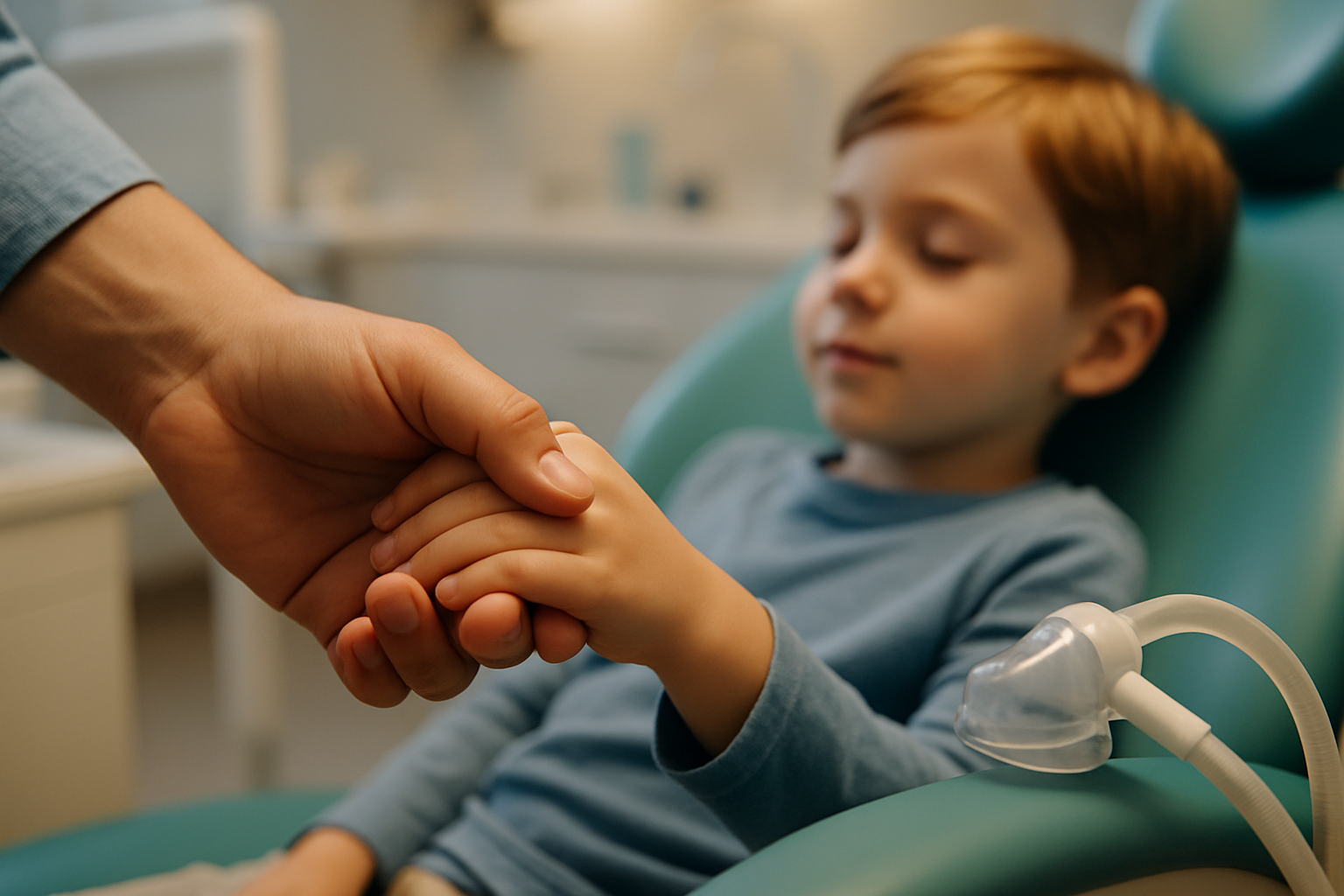
Nitrous oxide, commonly called “laughing gas,” is the mildest sedation option and often the perfect starting point for anxious families. Your dentist administers it through a small mask that fits over your nose, and within minutes, you feel relaxed and calm while remaining fully conscious.
What makes nitrous oxide especially family-friendly:
- It works quickly—taking effect in about five minutes
- You stay awake and can respond to your dentist’s instructions
- The effects wear off almost immediately after the mask is removed
- You can drive yourself home (or your child can play normally right after)
- It has an excellent safety record spanning decades
Many parents find that nitrous oxide helps their children develop positive associations with dental visits. Instead of fighting through fear, kids often describe feeling “floaty” or “silly”—experiences that make the dentist’s office less intimidating over time.
Oral Conscious Sedation: Deeper Relaxation in Pill Form
For moderate anxiety or longer procedures, oral conscious sedation offers a deeper level of relaxation. Your dentist prescribes a sedative medication—typically taken about an hour before your appointment—that makes you drowsy and deeply relaxed while still technically awake.
Parents appreciate oral sedation because it’s non-invasive and effective. Your child (or you) simply takes a pill, and by the time you arrive at the dental office, the medication has already started working. Most patients have little to no memory of the procedure afterward.
Important considerations for oral sedation:
- You’ll need someone to drive you home—the medication affects your coordination for several hours
- Your dentist will provide specific pre-appointment instructions about eating and drinking
- The sedation level can be adjusted by changing the dosage
- Children’s dosages are carefully calculated based on weight and medical history
This option works particularly well for patients who need Dental Crowns for Effective Tooth Restoration or other procedures that require sitting still for extended periods.
IV Sedation: Deep Relaxation for Complex Cases
Intravenous (IV) sedation provides the deepest level of conscious sedation available in a dental office. Your dentist administers medication through a vein, allowing for precise control over sedation depth throughout your procedure.
While IV sedation sounds intense, it’s actually the safest option for certain situations because your dentist can adjust your sedation level in real-time. You’ll be in a deeply relaxed state—many patients sleep through their entire procedure—but you can still be awakened if needed.
IV sedation makes sense when:
- You need extensive dental work completed in one visit
- Previous sedation methods haven’t been effective
- You have extreme dental phobia that prevents you from getting necessary care
- You’re undergoing oral surgery or implant placement
Recovery takes longer with IV sedation—plan for someone to stay with you for the rest of the day. However, many patients prefer this option because they can address years of delayed dental work in a single appointment rather than enduring multiple anxiety-filled visits.
Making the Right Choice for Your Family
Choosing the right sedation option isn’t about finding the “strongest” or “lightest” choice—it’s about matching the sedation level to your specific needs and anxiety level.
During your consultation at Parkway Family Dental, your dentist will consider several factors:
- The length and complexity of your planned procedure
- Your medical history and current medications
- Your previous experiences with dental anxiety
- Your child’s age, weight, and ability to cooperate
- Your personal preferences and comfort level
Many families start with nitrous oxide for routine procedures and progress to oral sedation only when needed for more involved work. There’s no shame in needing sedation—in fact, using it appropriately means you’re more likely to maintain good oral health because you’ll actually keep your dental appointments.
Preparing for Your Sedation Appointment
Once you’ve chosen a sedation option, proper preparation ensures the best experience. Your Kalispell dental team will provide detailed instructions, but here are general guidelines:
Before your appointment:
- Follow fasting instructions carefully (especially important for oral and IV sedation)
- Arrange transportation home—even for “mild” sedation, it’s safer
- Wear comfortable clothing
- Share any changes in medications or health status
- For children, explain the experience in positive, age-appropriate terms
After your appointment:
- Plan a quiet day at home for recovery
- Keep soft foods on hand—your mouth may be numb
- Avoid important decisions or driving until the medication fully wears off
- Follow all post-procedure care instructions
Just as you’d Protect Your Teeth From Dental Trauma During the Holidays by being prepared, preparing properly for sedation dentistry ensures a smooth, safe experience.
Safety and Monitoring During Sedation
Parents understandably worry about sedation safety. The reality is that when administered by trained dental professionals, sedation dentistry is extremely safe. At Parkway Family Dental, our team monitors your vital signs throughout your procedure, including heart rate, blood pressure, and oxygen levels.
Modern sedation dentistry follows strict protocols:
- Pre-sedation health screening to identify any risk factors
- Appropriate dosing based on weight, age, and medical history
- Continuous monitoring by trained staff
- Emergency equipment and protocols always available
- Post-procedure monitoring until you’re ready to go home
Serious complications are extraordinarily rare, especially with lighter sedation methods like nitrous oxide and oral sedation. Your dentist will discuss any specific risks based on your individual health profile.
Beyond Sedation: Building Long-Term Dental Comfort
While sedation dentistry solves immediate anxiety problems, the ultimate goal is helping you and your children feel more comfortable with dental care over time. Many patients find that positive experiences under sedation actually reduce their anxiety for future visits.
Combine sedation with these strategies for lasting change:
- Schedule regular checkups before problems develop—prevention is less stressful than emergency treatment
- Communicate openly with your dental team about what triggers your anxiety
- Practice good home care to minimize the need for extensive procedures
- Consider bringing headphones or stress balls to appointments
- Celebrate successful dental visits with your children to build positive associations
Maintaining practices like those in 10 Proven Ways to Fresh Breath and Improve Your Oral Health means you’ll need fewer complex procedures—and less sedation—over time.
Taking the Next Step Toward Stress-Free Dental Care
Dental anxiety doesn’t have to control your family’s oral health. Sedation dentistry options give you the tools to receive necessary care in comfort, whether that’s a simple cleaning or extensive restorative work.
The first step is simply having a conversation. At Parkway Family Dental in Kalispell, we understand that every patient’s anxiety is different—and we’re committed to finding the sedation approach that works for your unique situation. We’ve helped countless families transform their relationship with dental care, and we can help yours too.
Don’t let another year pass with untreated dental issues because of fear. Call Parkway Family Dental today to discuss your sedation options and schedule a consultation. Your comfort matters just as much as your dental health—and with the right sedation approach, you can have both.
Frequently Asked Questions
Is sedation dentistry safe for children?
Yes, sedation dentistry is very safe for children when administered by trained dental professionals. Dosages are carefully calculated based on your child’s weight and medical history, and vital signs are monitored throughout the procedure. Nitrous oxide, in particular, has an excellent safety record spanning decades and is commonly used for pediatric patients.
Will I or my child be completely unconscious during sedation dentistry?
It depends on the sedation level. With nitrous oxide and oral conscious sedation, you remain awake and can respond to instructions, though you’ll feel very relaxed. IV sedation puts you in a deeper state where many patients sleep through the procedure, but you can still be awakened if needed. Only general anesthesia (performed in a hospital setting) renders you completely unconscious.
How long does it take to recover from dental sedation?
Recovery time varies by sedation type. Nitrous oxide wears off within minutes, allowing you to resume normal activities immediately. Oral sedation typically requires 2-4 hours of rest, and you shouldn’t drive for the remainder of the day. IV sedation requires the most recovery time—plan for a quiet day at home and arrange for someone to stay with you.
Does dental insurance cover sedation dentistry?
Coverage varies by insurance plan and the reason for sedation. Many plans cover sedation for children or patients with special needs, but may not cover it for routine anxiety in adults. Some plans cover sedation when it’s medically necessary for complex procedures. Contact your insurance provider or our office to verify your specific coverage before your appointment.
Can I eat before a sedation dentistry appointment?
Fasting requirements depend on your sedation type. Nitrous oxide typically doesn’t require fasting, though a light meal is recommended. Oral and IV sedation usually require fasting for 6-8 hours before your appointment to prevent nausea. Your dentist will provide specific instructions based on your chosen sedation method and the time of your appointment.